
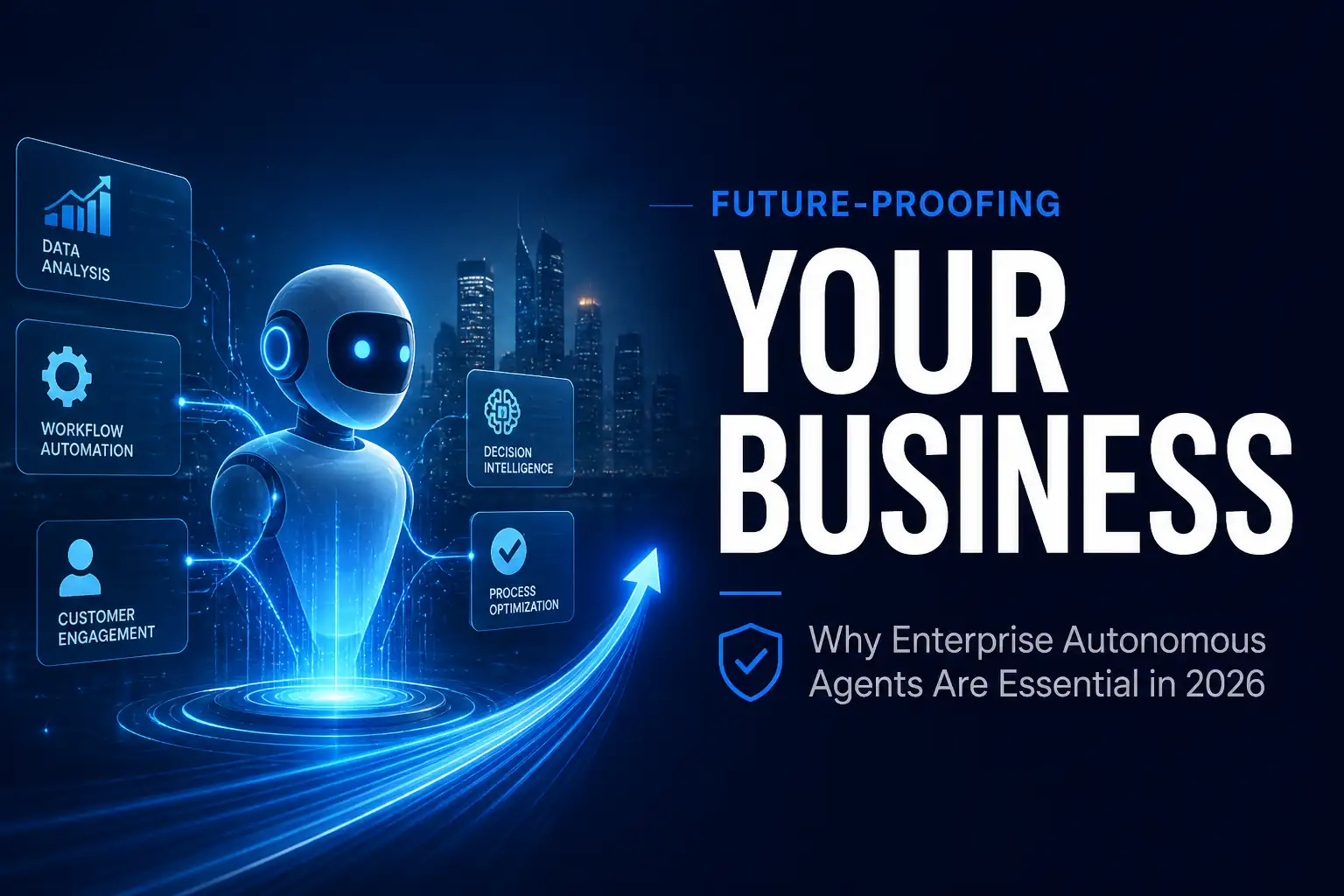
Why are autonomous agents essential for enterprise businesses in 2026?
In 2026, autonomous agents are essential because they move beyond generating text to executing complex workflows independently. They utilize multi-agent architectures to connect APIs, maintain enterprise-grade security, and drive measurable ROI by fully automating operational bottlenecks without continuous human prompting.
Hook Introduction
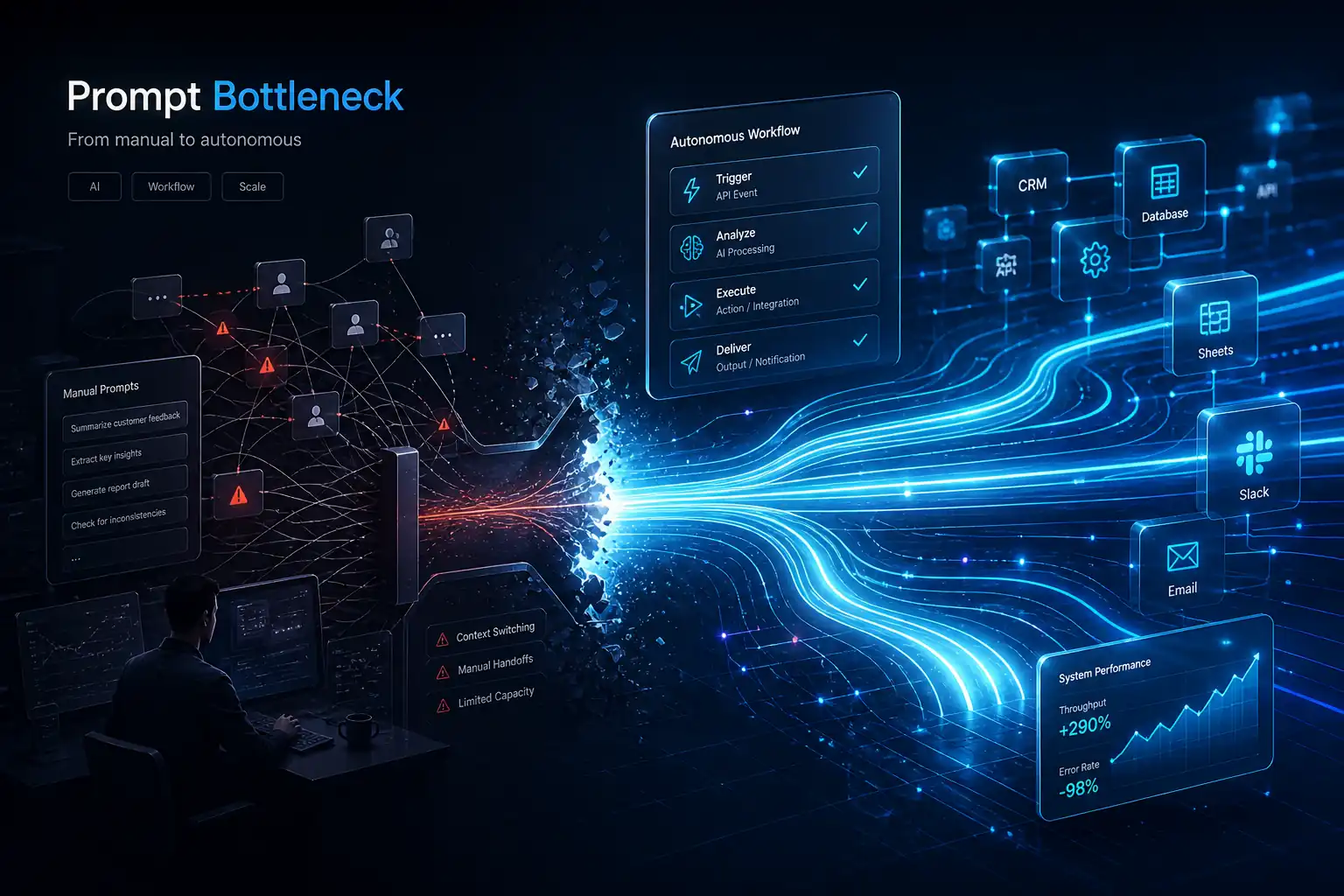
Are your smartest employees still wasting hours writing prompts and waiting for an AI to reply? The fatigue of manual AI prompting is creating a massive bottleneck in global enterprise environments.
Standard Large Language Models (LLMs) are great at talking, but they cannot do the actual work for you. This is where the shift to Large Action Models (LAMs) and agentic workflows changes everything.
The focus is no longer on what AI can say, but on what it can do without human hand-holding. To stay competitive with enterprise autonomous agents 2026 technologies, you need a new approach.
This guide provides a complete blueprint for C-suite leaders to scale multi-agent operations safely and securely across global markets.
| Bottleneck | 2025 Standard AI | 2026 Autonomous Agents |
| Action | Requires human prompting | Triggers via API events |
| Scalability | 1-to-1 human/AI ratio | 24/7 independent execution |
Why This Matters (The 2026 Business Reality)
We have officially moved past AI being just a “cool tool” for drafting emails. Today, it is a core operational driver that dictates market dominance.
Experts agree on this rapid shift. In fact, Gartner predicts that 33% by 2028 of enterprise applications will use autonomous agents by the end of the year.
There is a real risk of falling behind. Competitors are already deploying 24/7 autonomous workforces to handle customer support, data entry, and code deployment.
The logic is simple: standard teams sleep, but multi-agent systems compound your operational efficiency around the clock.
Core Problem Analysis (Moving Beyond the Chat UI)
The root cause of AI stagnation is human-in-the-loop dependencies. When your system waits for a human to hit “enter,” you limit your ability to scale.
Standard LLMs struggle here. They cannot execute multi-step API actions reliably without forgetting instructions or losing context.
Basic RPA (Robotic Process Automation) is also no longer enough. RPA breaks the moment a global market dynamic changes or a website layout updates.
A common mistake leaders make is treating autonomous agents like simple chatbots. They either under-utilize them or fail to set strict data governance perimeters, creating massive security holes. For more on safe deployment, check out AI Security Policies page.
Step-by-Step Solution: Implementing Multi-Agent Architectures
Deploying an enterprise AI agent requires careful planning. You cannot simply plug a multi-agent system into your database and hope for the best.
Below is the proven integration framework for mid-market and global enterprises.
Step 1: Process Auditing & Feasibility
Do not try to automate everything at once. Start by identifying high-volume, rules-based workflows.
The ideal candidate for an agentic workflow is a task with clear API accessibility and a high human error rate. Data entry, lead qualification, and basic QA testing are perfect starting points.
Step 2: Architecture Selection
Next, you must choose your system structure. Single-agent orchestration works well for isolated tasks.
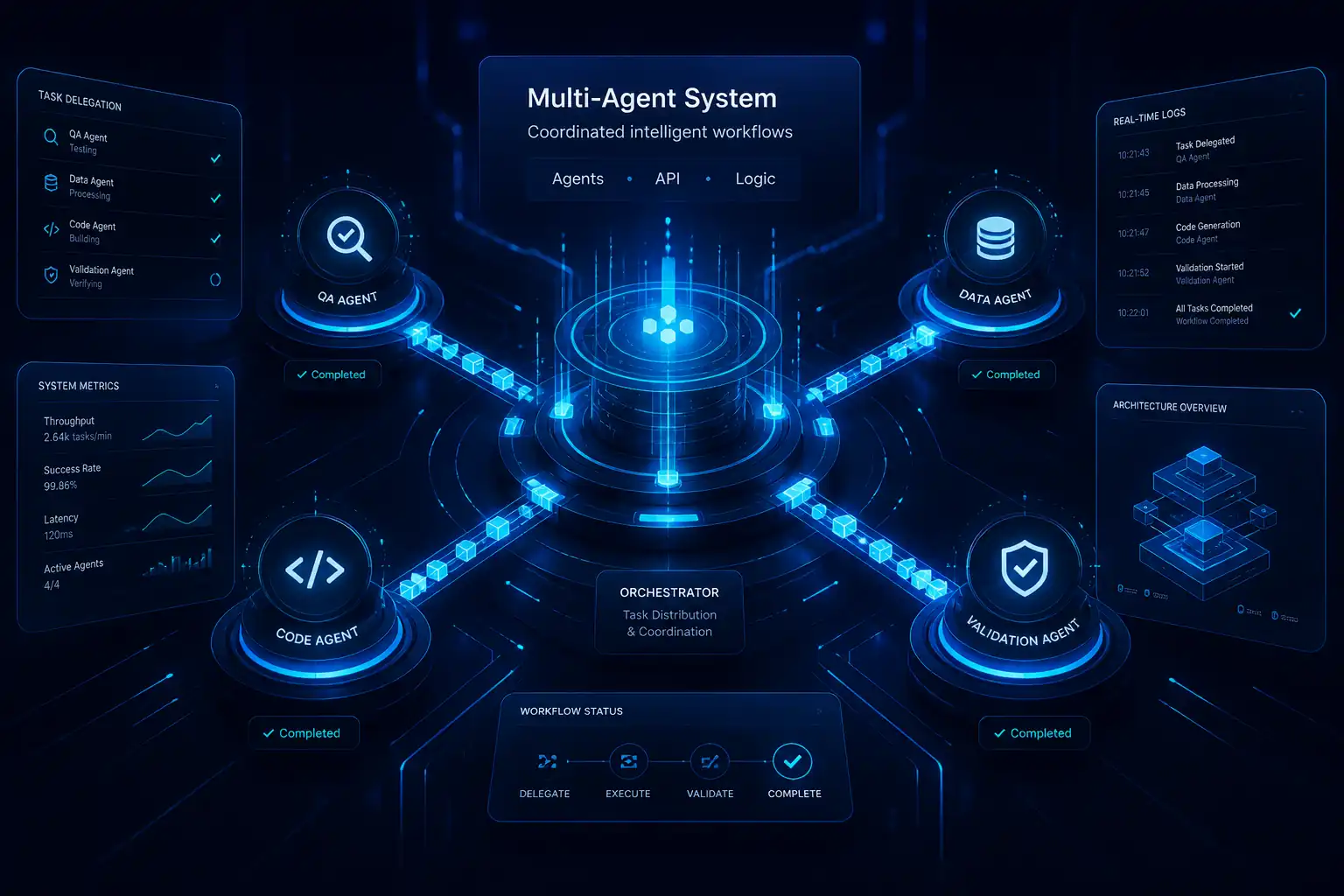
However, multi-agent architectures are where the real ROI lives. You can deploy specialized agents—one for QA, one for coding, and one for data retrieval—that talk to each other to complete complex projects.
Step 3: Security & Governance Protocols
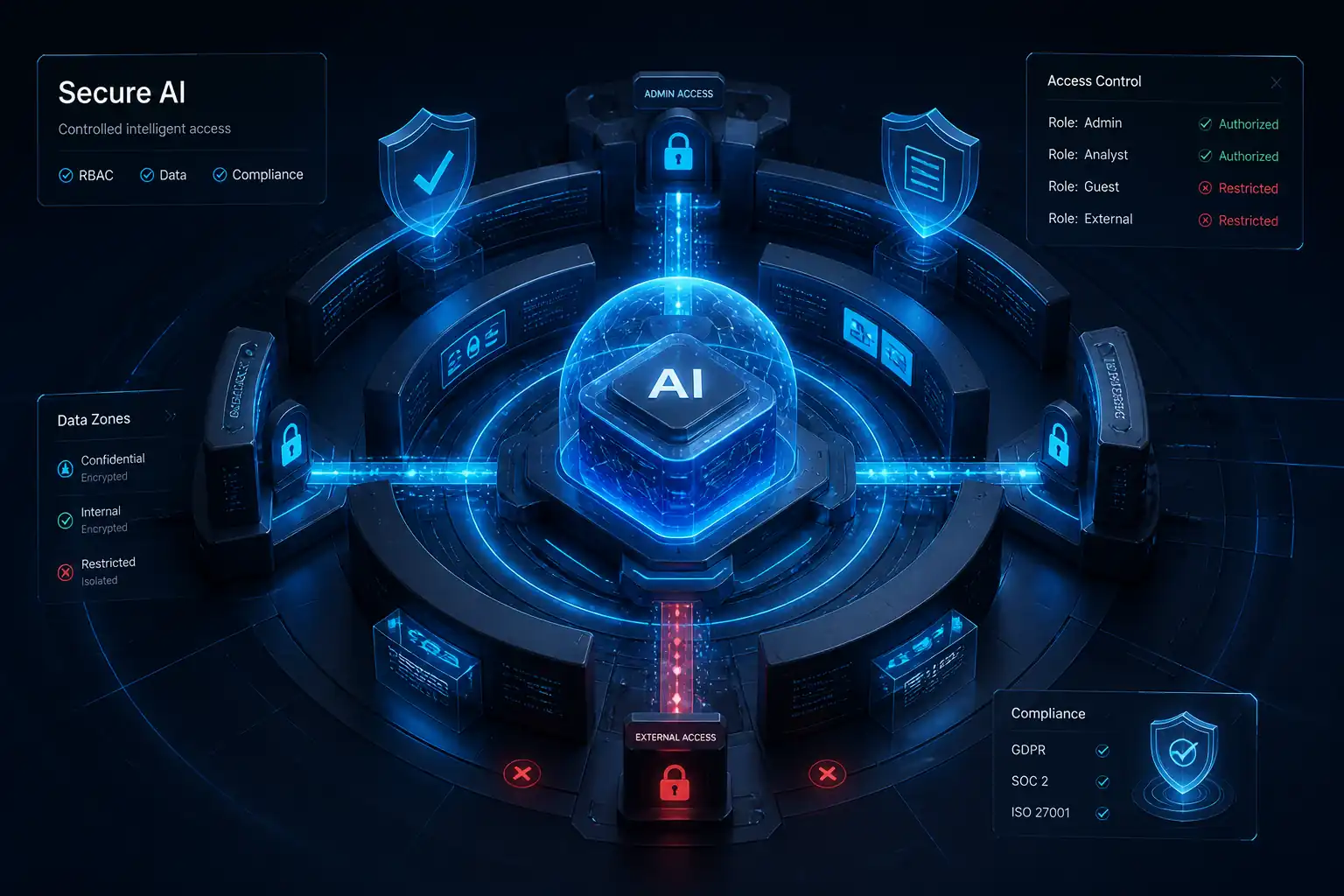
This is the most critical step. Your agents need strict Role-Based Access Control (RBAC).
If you operate globally, you must ensure GDPR / Global Data Compliance within the agent’s memory banks. An agent should never retain or access personally identifiable information (PII) unless explicitly authorized and encrypted.
Standard LLMs vs. Autonomous Agents
It is vital to understand the difference between standard models and true agents. An LLM is a thinker. An autonomous agent is a doer.
When you integrate autonomous agents securely, you bridge the gap between idea and execution.
| Feature | Standard LLMs | Autonomous Agents |
| Execution | Waits for human prompt | Triggers own actions |
| Workflow | Single-step answers | Multi-step task completion |
| System Access | Read-only / Isolated | Write-access via APIs |
| Value to C-Suite | Brainstorming & Drafting | End-to-end Operational ROI |
Advanced Strategy: Scaling Agentic Workflows
Once your first agents are live, it is time to scale. The first rule is to limit “Human-in-the-Loop” (HITL) interventions.
HITL should only exist for edge-case exceptions or high-risk financial approvals. It should never be part of daily, routine operations.
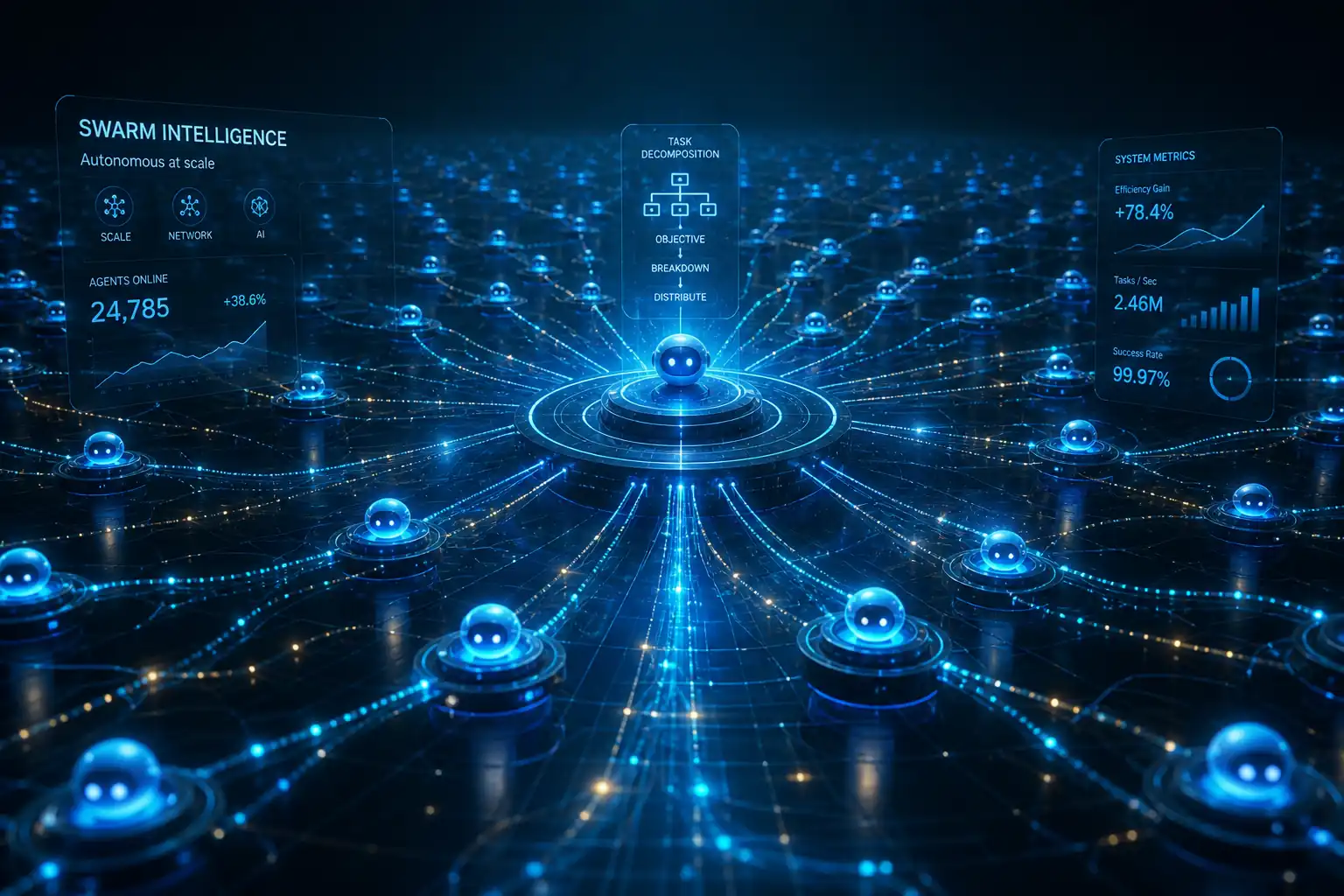
To truly scale, deploy “Swarm Intelligence.” This is an architecture where a master supervisor agent breaks down a massive project and delegates tasks to specialized worker agents.
To make this work seamlessly, you must navigate API rate limits carefully. API Integration Solutions can help optimize your cloud computing costs to ensure your multi-agent loops remain highly profitable.
The Expert Framework (E-E-A-T SAFE)
Theory only goes so far. We recently helped a global logistics firm transition from manual data entry to a fully autonomous setup.
For example, the client was drowning in customs paperwork, causing 48-hour shipping delays.
We applied our 3-Step “Deploy-Secure-Scale” System. First, we mapped the APIs. Next, we locked down the data governance. Finally, we launched a multi-agent workflow to handle document verification.
The results were immediate. We reduced workflow execution time by 65% while maintaining strict SOC2 and global compliance standards.
Common Implementation Mistakes (And How to Fix Them)
Even the best IT teams make mistakes when building LLM orchestration pipelines in 2026. The biggest risk is giving agents unrestricted database access.
This is a massive security threat. Always establish hard API boundaries and “least privilege” access.
Another common error is writing vague system prompts. This confuses the agent and can lead to infinite loops, which drains your API budget instantly. Fix this by setting strict token and budget limits per task.
Finally, do not ignore global latency. If your agents are in New York but your database is in Tokyo, performance will suffer. Utilize edge computing to keep agents close to the data they need.
| Major Error | The Risk | The Actionable Fix |
| Unrestricted database access | Security breach | Establish hard API boundaries via RBAC |
| Vague system prompts | Infinite API loops (High Cost) | Set token and budget limits per task |
| Ignoring global latency | Slow multi-region performance | Utilize edge computing servers |
Future Trends & Final Thoughts
The enterprise AI future is moving incredibly fast. By Q4 2026, we will see the deep integration of autonomous agents directly into legacy ERP systems.
You will not just ask your CRM for a report; your CRM’s native agents will pull the data, analyze it, email the client, and update the pipeline automatically. For a deeper dive into these projections, review the latest Gartner AI report.
You now have the strategy. You understand the ROI of multi-agent workflows in enterprise settings. Now, you need the infrastructure to make it happen.
If you are ready to modernize your operations safely, we are here to help. Explore our Enterprise AI Consulting Services to get started.
FAQ: Enterprise Autonomous Agents
1. What is an autonomous agent in business?
An autonomous agent is an AI system that executes tasks independently. Unlike standard chatbots that require constant human prompting, autonomous agents use tools, access APIs, and make logical decisions to complete complex, multi-step business processes from start to finish.
2. How do multi-agent systems work?
Multi-agent systems work by networking several specialized AI agents together. A supervisor agent receives a complex goal, breaks it down into smaller steps, and delegates those steps to worker agents (like a coding agent or data-entry agent) to complete collaboratively.
3. What is the difference between an AI agent and Copilot?
A Copilot acts as a digital assistant. It sits beside a human worker, offering suggestions or drafting text, but requires the human to approve and execute the final action. An AI agent acts independently, executing the final action without human intervention.
4. What is a Large Action Model (LAM)?
A Large Action Model (LAM) is an advanced AI model designed specifically to interact with software interfaces and APIs. While Large Language Models (LLMs) generate text, LAMs are built to click buttons, navigate websites, and execute digital actions autonomously.
5. How do you measure the ROI of enterprise AI agents?
You measure ROI by tracking the reduction in human labor hours, the decrease in task error rates, and the increase in overall processing speed. Compare the cloud computing and API costs of the agent against the previous manual operational expenses.
6. What are agentic workflows?
Agentic workflows are automated business processes driven by AI agents rather than hard-coded scripts or human workers. In these workflows, agents dynamically adapt to errors, use external tools, and make logical decisions to ensure the workflow reaches its final goal.
7. How do autonomous agents integrate with existing ERPs?
Autonomous agents integrate with ERPs primarily through secure APIs. The agent is granted specific, restricted access to read and write data within the ERP, allowing it to autonomously update inventory, process invoices, or generate financial reports based on external triggers.
8. What is “Swarm Intelligence” in AI?
Swarm intelligence refers to the collective behavior of multiple AI agents working together in a decentralized way. Much like a colony of bees, these agents communicate, share data, and collaborate to solve complex enterprise problems faster than a single AI model could.
9. How do you prevent an autonomous agent from hallucinating?
You prevent hallucinations by strictly limiting the agent’s context window to verified enterprise data (using RAG architecture). Additionally, providing clear, rigid system prompts and restricting the agent from guessing answers outside its immediate operational parameters keeps outputs accurate.
10. How do businesses secure data accessed by AI agents?
Businesses secure data by implementing Role-Based Access Control (RBAC). Agents are only given “least privilege” access necessary for their specific task. Furthermore, companies use private cloud environments and ensure no customer data is used to train public models.
11. How do you stop an AI agent from entering an infinite loop?
You stop infinite loops by setting hard limits at the API level. Implement strict token usage caps, maximum step counts for any given task, and budget thresholds. If the agent hits the limit without finishing, the task pauses for human review.
12. What happens when an API fails during an agent’s task?
When an API fails, a well-designed agent uses error-handling protocols. It can automatically retry the connection, search for an alternative tool to complete the task, or safely pause the workflow and send an alert to a human supervisor for troubleshooting.
